
Share Russell H. Batt's obituary with others.
Invite friends and family to read the obituary and add memories.
Stay updated
We'll notify you when service details or new memories are added.
You're now following this obituary
We'll email you when there are updates.
Select your format and elements to print

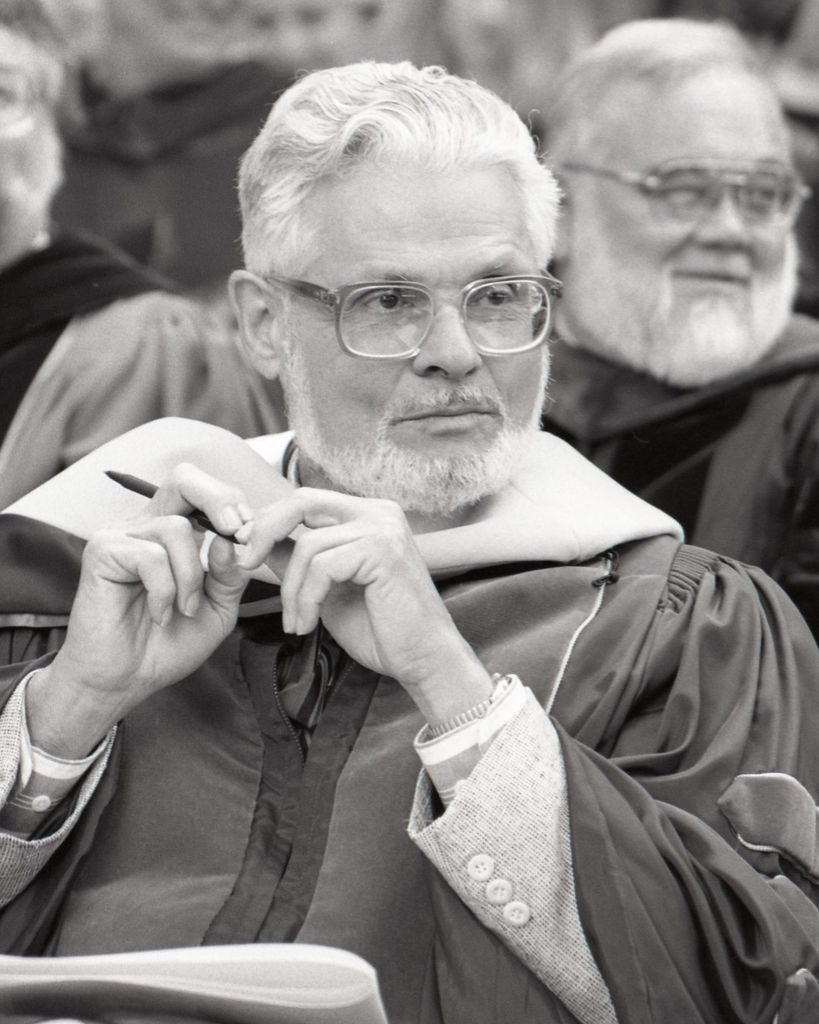


Russell H. Batt
Jul 27, 1930 — Jan 21, 2026
Russell “Russ” H. Batt H’00, a professor emeritus of chemistry who loved the outdoors and spent decades leading students through the challenges of quantum mechanics and thermodynamics, died Jan. 21 at the age of 87. The longtime Gambier resident, who relocated in recent years to Tennessee, retired in 2000 after teaching for more than 30 years.
Born July 27, 1938, in Worcester, Massachusetts, Batt received a Bachelor of Science degree in chemistry in 1960 from the University of Rochester in New York, where he met his future wife, Carolyn, as lab partners during their freshman year. They went on to study at the University of California, Berkeley, where he received a doctorate in chemistry in 1964.
Batt was hired as an assistant professor at Kenyon in 1968, after teaching briefly at Wesleyan University and serving as a postdoctoral fellow at Dartmouth College. He received tenure in 1974.
Known for his dry wit and sly smile, he became a fixture on campus and in the local community.
“Russ was an icon in this department,” said Professor of Chemistry Jamie Keller.
His research was devoted to an understanding of the fundamental nature of molecular structure and chemical reactivity using quantum mechanical principles. A pioneer in the use of computers in chemical education, Batt served for a decade as the editor of a feature series in the Journal of Chemical Education that focused on the use of computers as a teaching tool in the classroom. He also served on an advisory committee for the American Chemical Society’s division of chemical education.
Batt was part of the Integrated Program in Humane Studies at Kenyon for seven years and was “equally adept at discussing the Heisenberg Uncertainty Principle and Melville’s ‘Moby Dick,’” according to a citation he received with his honorary degree in 2000.
Former Kenyon professor of chemistry Scott Cummings said Batt had a heart of gold and regularly advocated for students’ perspectives on issues and championed the visions of younger faculty. He also brought a wide-ranging perspective with him.
“Conversations with Russ could begin with a debate about molecular orbital calculations, digress into descriptions of hiking trails, and end with his and Carolyn’s love of Wagnerian opera,” Cummings said.
Outside of the classroom, Batt found great joy in the natural world and loved hiking in the mountains of the American West, especially the Wind River Range in Wyoming. These trips — sometimes undertaken with the Kenyon Wilderness Program that he cofounded — reflected his adventurous spirit and his desire to connect learning with lived experience, his daughter, Karen Kerrigan, said.
In retirement, he and his wife enjoyed visiting Kauai, Hawaii, and traveling extensively to see symphonies and operas, particularly Richard Wagner’s “Ring” cycle.
And always, his daughter said, Batt remained deeply interested in people, particularly his students. “He was very proud of his students and kept in touch with quite a few of them,” she said.
Batt was preceded in death by his wife, Carolyn, who spent most of her career in the College registrar’s office and shared his commitment to education and community. He is survived by his children Karen (Ray) Kerrigan and Brian (Pattie) Batt; five grandchildren; and two great-grandchildren. Services will be private.
Guestbook
Visits: 300
This site is protected by reCAPTCHA and the
Google Privacy Policy and Terms of Service apply.
Service map data © OpenStreetMap contributors